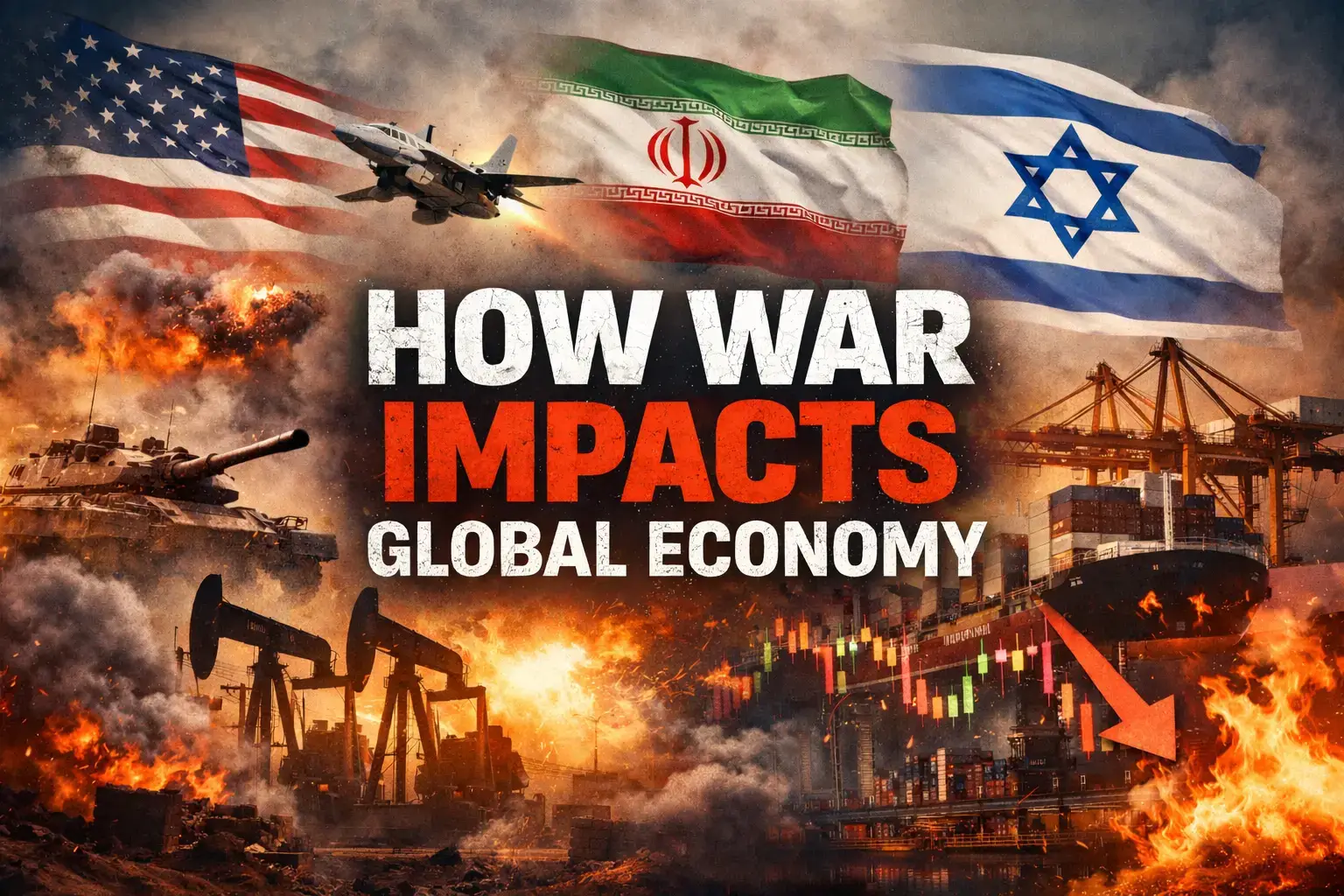
Introduction to War Impacts Global Economy
Global conflicts have always shaped the direction of economies, trade systems, and financial markets. The recent tensions involving Israel, Iran, and the United States have once again raised serious concerns about economic stability worldwide. While the immediate focus of war is often on military developments and political consequences, its economic effects are equally significant and long-lasting.
War disrupts the normal functioning of global systems. It affects supply chains, increases uncertainty in markets, and directly impacts the cost of living for millions of people. From rising fuel prices to increasing food costs and unstable currencies, the ripple effects of conflict spread across borders.
This article provides a complete analysis of how war affects global trade, why prices increase, which sectors are most impacted, and how economies, particularly developing ones like Pakistan, respond to such crises. It also offers practical strategies to help individuals and businesses navigate financial uncertainty during times of conflict.
Understanding the Economic Nature of War
War is not only a geopolitical event; it is also a powerful economic shock. When conflict begins, governments redirect resources toward defense spending, investors become cautious, and businesses face operational challenges. The economic environment becomes unstable due to uncertainty, which is one of the most significant drivers of market behavior.
Several key factors explain why war impacts the economy so strongly. First, production is often disrupted, especially in regions directly affected by conflict. Second, global supply chains, which rely on smooth transportation and coordination, face delays and interruptions. Third, financial markets react negatively to uncertainty, leading to volatility. Finally, international trade is affected by sanctions, restrictions, and logistical challenges.
The global economy is interconnected. A disruption in one region, especially a strategically important one, can create consequences worldwide. This is particularly true when conflicts involve major economies or regions critical to global energy supply.
Table of Contents of War Impacts Global Economy
How War Disrupts Global Trade
Oil Supply and Energy Markets
Energy is the backbone of modern economies, and oil is one of the most critical resources in global trade. The Middle East plays a central role in oil production and distribution, making it highly sensitive to geopolitical tensions. When conflict arises in this region, concerns about supply disruptions immediately affect global markets.
Oil prices tend to rise rapidly during war due to fears of reduced supply. Even the possibility of disruption can cause significant price increases because markets react to expectations as much as actual shortages. Higher oil prices increase costs across multiple sectors, including transportation, manufacturing, and energy production.
Countries that rely heavily on oil imports are particularly vulnerable. Increased energy costs lead to higher expenses for businesses and consumers, contributing to inflation.
Shipping and Logistics Challenges
Global trade depends heavily on efficient shipping networks. Goods are transported across continents through well-established maritime routes. However, war introduces risks that can disrupt these systems.
Shipping companies may avoid conflict zones, leading to longer and more expensive routes. Insurance costs for cargo increase significantly due to higher risk. Ports and infrastructure may also be affected, causing delays and congestion.
These disruptions increase the cost of moving goods worldwide. As transportation becomes more expensive, the cost is passed on to consumers in the form of higher prices.
Sanctions and Trade Restrictions
Economic sanctions are commonly used during conflicts as a tool of political pressure. Sanctions can restrict a country’s ability to trade, access financial systems, and participate in global markets.
When sanctions are imposed, the availability of certain goods decreases. This reduction in supply leads to higher prices. Businesses that rely on imports or exports from affected regions face significant challenges, including increased costs and reduced market access.
Sanctions also impact global trade relationships. Countries may need to find alternative suppliers or markets, which can be less efficient and more expensive.
Why Prices Increase During War
Supply Chain Disruptions
Modern supply chains are complex networks that span multiple countries. War disrupts these networks by affecting production, transportation, and distribution.
Factories may slow down or shut down due to lack of raw materials or security concerns. Transportation delays create bottlenecks. As a result, goods become scarce, and prices increase.
Rising Transportation Costs
Transportation is a key component of global trade. During war, fuel prices increase, and shipping becomes riskier. These factors raise the cost of transporting goods.
Higher transportation costs affect all industries, from food and agriculture to manufacturing and retail. Businesses pass these costs to consumers, leading to widespread price increases.
Currency Instability
War creates uncertainty in financial markets, causing investors to seek safer assets. This often strengthens major currencies like the US dollar while weakening others.
For countries with weaker currencies, imports become more expensive. This contributes to inflation and reduces purchasing power for consumers.
What Becomes Expensive During War
Fuel and Energy
Fuel prices are usually the first to rise during conflict. Increased oil prices affect petrol, diesel, and other energy sources. Higher fuel costs impact transportation, electricity, and production.
Food and Essential Goods
Food prices increase due to higher transportation costs and supply disruptions. Agricultural production may also be affected in conflict regions. Essential items such as wheat, rice, and cooking oil become more expensive.
Electricity and Utilities
Countries that rely on fuel for electricity generation face higher energy costs. This leads to increased electricity bills for households and businesses.
Transportation and Travel
Air travel, shipping, and public transportation become more expensive due to higher fuel costs. This affects both individuals and businesses.
Construction Materials
The construction industry relies on materials such as steel, cement, and machinery. War disrupts supply chains, making these materials more expensive.
Imported Goods
Electronics, machinery, and other imported products become costly due to currency depreciation and higher shipping costs.
War Impacts on Global Financial Markets
Inflation
Inflation is one of the most significant economic effects of war. As prices rise across sectors, the cost of living increases. This reduces purchasing power and affects economic stability.
Stock Market Volatility
Financial markets react quickly to uncertainty. War creates fear among investors, leading to fluctuations in stock prices. Some sectors may decline, while others, such as defense and energy, may see growth.
Currency Fluctuations
Currencies of developing countries often weaken during global uncertainty. This makes imports more expensive and contributes to inflation.
Economic Slowdown
Prolonged conflicts can slow economic growth. Reduced investment, lower consumer spending, and disrupted trade contribute to economic slowdown or even recession.

War Impacts Global Economy on Gold, Oil, and Cryptocurrency
Gold is traditionally considered a safe-haven asset. During times of uncertainty, demand for gold increases, driving up its price.
Oil prices become highly volatile during conflict. While they often increase due to supply concerns, they can also fluctuate based on geopolitical developments.
Cryptocurrency markets may experience volatility as investors explore alternative assets. However, crypto remains a high-risk investment during uncertain times.
How to Protect Your Money During War
Budget Management
Creating a clear budget is essential during times of economic uncertainty. Focus on essential expenses and avoid unnecessary spending.
Safe Investments
Investing in stable assets such as gold or strong currencies can help protect wealth. Diversification is important to reduce risk.
Reducing Debt
Avoid taking on new debt during uncertain times. High-interest loans can become difficult to manage if economic conditions worsen.
Increasing Income Sources
Exploring additional income sources, such as freelancing or online work, can provide financial stability.
Smart Consumption
Buying essential goods in bulk and avoiding waste can help manage rising costs.
With rising costs and inflation due to global events, it’s crucial to revisit our guide on how to save money in 2026 for practical budgeting tips.
Future Outlook
The long-term impact of war depends on its duration and intensity. Short-term effects include price increases and market volatility. Long-term effects may include inflation, economic slowdown, and changes in global trade patterns.
Governments and international organizations play a key role in stabilizing economies and restoring confidence. Peace and cooperation are essential for economic recovery.
War Impacts on United States & Iran & Israel
1. Economic Impact on the United States
The United States is less physically affected by war on its own land, but the economic consequences are significant.
Defense Spending Surge
War increases military budgets dramatically. The U.S. government allocates billions more to defense, weapons production, and global military operations. This benefits defense companies but increases national debt.
Oil Price Shock
Any conflict involving Iran threatens oil supply, especially through the Strait of Hormuz. This pushes global oil prices higher, leading to inflation in the U.S. economy.
Higher fuel costs increase transportation, food, and production expenses.
Stock Market Volatility
War creates uncertainty. Investors often move money into safe assets like gold. Stock markets can fall in the short term due to fear and instability.
Global Trade Disruptions
The U.S. depends on global trade routes. Conflict in the Middle East can disrupt shipping, increasing costs for imports and exports.
2. Economic Impact on Iran
Iran faces the most severe economic consequences due to direct involvement.
Heavy Sanctions Pressure
Iran is already under strict international sanctions. War intensifies these restrictions, limiting exports, especially oil.
Research shows sanctions weaken currency, increase inflation, and reduce economic growth.
Currency Collapse and Inflation
The Iranian rial typically loses value during conflict. This leads to rising prices for basic goods, making life more expensive for citizens.
Oil Export Disruptions
Iran relies heavily on oil revenue. War reduces production and export capacity, cutting government income.
Infrastructure Damage
Military strikes can damage key infrastructure like refineries, factories, and transport systems, slowing economic activity.
Rising Unemployment
Businesses shut down or reduce operations, increasing unemployment and poverty.
3. Economic Impact on Israel
Israel has a strong but sensitive economy that reacts quickly to geopolitical shocks.
Increased Defense Costs
Military operations require large spending, which strains government finances.
Investment and Business Uncertainty
Foreign investors may pause investments during war. This affects startups, tech companies, and economic growth.
Tourism Collapse
Tourism drops sharply during conflict, reducing revenue for hotels, airlines, and local businesses.
Financial Market Pressure
War increases risk perception. Studies show long-term borrowing costs can rise due to higher risk premiums.
Short-Term vs Long-Term Effects
In the short term, economic activity slows. However, Israel’s economy often recovers quickly after conflict ends.
How War Impacts Global Economic Effects
This conflict does not stay limited to these countries—it impacts the entire global economy.
Oil Prices Rise Rapidly
Iran is near key oil routes. Around 20% of global oil passes through the Strait of Hormuz. Any disruption can spike prices sharply.
Inflation Worldwide
Higher oil prices increase costs of goods and services globally, causing inflation in many countries.
Supply Chain Disruptions
War affects shipping routes and logistics, increasing delays and costs for businesses worldwide.
Shift to Safe Investments
Investors move money into gold, U.S. dollar, and other safe assets during war periods.
Who Gains and Who Loses?
Winners
- Oil-producing countries (higher prices)
- Defense companies (increased demand)
- Safe-haven assets (gold, USD)
Losers
- Oil-importing countries (higher costs)
- Consumers (inflation)
- Global trade and businesses
Conclusion of War Impacts
The ongoing conflict involving United States, Iran, and Israel highlights how deeply war can influence the global financial system. From rising oil prices to disrupted trade routes and increasing inflation, the war impact on global economy 2026 is both immediate and far-reaching.
As seen throughout this analysis, the Israel Iran war economic impact extends beyond the battlefield, affecting fuel prices, supply chains, and international markets. The global trade disruption war scenario leads to higher shipping costs, delays, and limited availability of goods, which ultimately drives inflation worldwide. At the same time, oil prices war 2026 remains one of the biggest concerns, as energy costs directly influence transportation, production, and daily expenses.
Understanding how war affects trade and prices is essential for individuals, businesses, and investors. Whether it is the rise in essential goods, currency fluctuations, or market instability, the inflation due to war becomes unavoidable in most cases. For countries like Pakistan, the situation becomes even more challenging due to reliance on imports and weaker currency strength.
In conclusion, the war impact on global economy 2026 is not limited to one region—it creates a ripple effect across the world. Staying informed, planning finances carefully, and adapting to economic changes are crucial steps to managing uncertainty during such global crises.
FAQs:War Impacts Global Economy
Does the Israel-Iran war affect the global economy?
Yes. The conflict between Israel, Iran, and the United States disrupts trade, increases oil prices, and leads to inflation, creating a significant war impact on global economy 2026.
Which sectors are most affected by the Israel-Iran war?
Energy, transportation, food, manufacturing, and financial markets are most affected. Rising fuel prices and trade disruptions are key consequences of the Israel Iran war economic impact.
Will oil prices increase during the war?
Yes. Conflict in the Middle East, especially near key oil routes like the Strait of Hormuz, causes uncertainty in supply, leading to higher oil prices war 2026.
How does war affect global trade?
War disrupts shipping routes, increases transport costs, and causes supply chain delays. This results in global trade disruption war and higher prices for imported goods.
How can individuals protect their finances during war?
Investing in safe assets like gold, budgeting carefully, diversifying income sources, and reducing debt can help mitigate financial risk caused by war-related inflation.
Will inflation rise due to the Israel-Iran war?
Yes. Supply chain disruptions, higher fuel costs, and trade restrictions contribute to inflation due to war, affecting daily expenses worldwide.
Is the US economy affected by the Israel-Iran conflict?
Yes. While the US is geographically distant, it experiences inflation, stock market volatility, higher defense spending, and global trade impacts, making it part of the war impact on global economy 2026.
How is Iran affected economically during the war?
Iran suffers heavily due to sanctions, disrupted oil exports, currency depreciation, and infrastructure damage, resulting in severe economic consequences.
How is Israel’s economy affected by the war?
Israel faces increased defense spending, investment uncertainty, reduced tourism, and short-term financial pressure, although its economy can recover faster post-conflict.