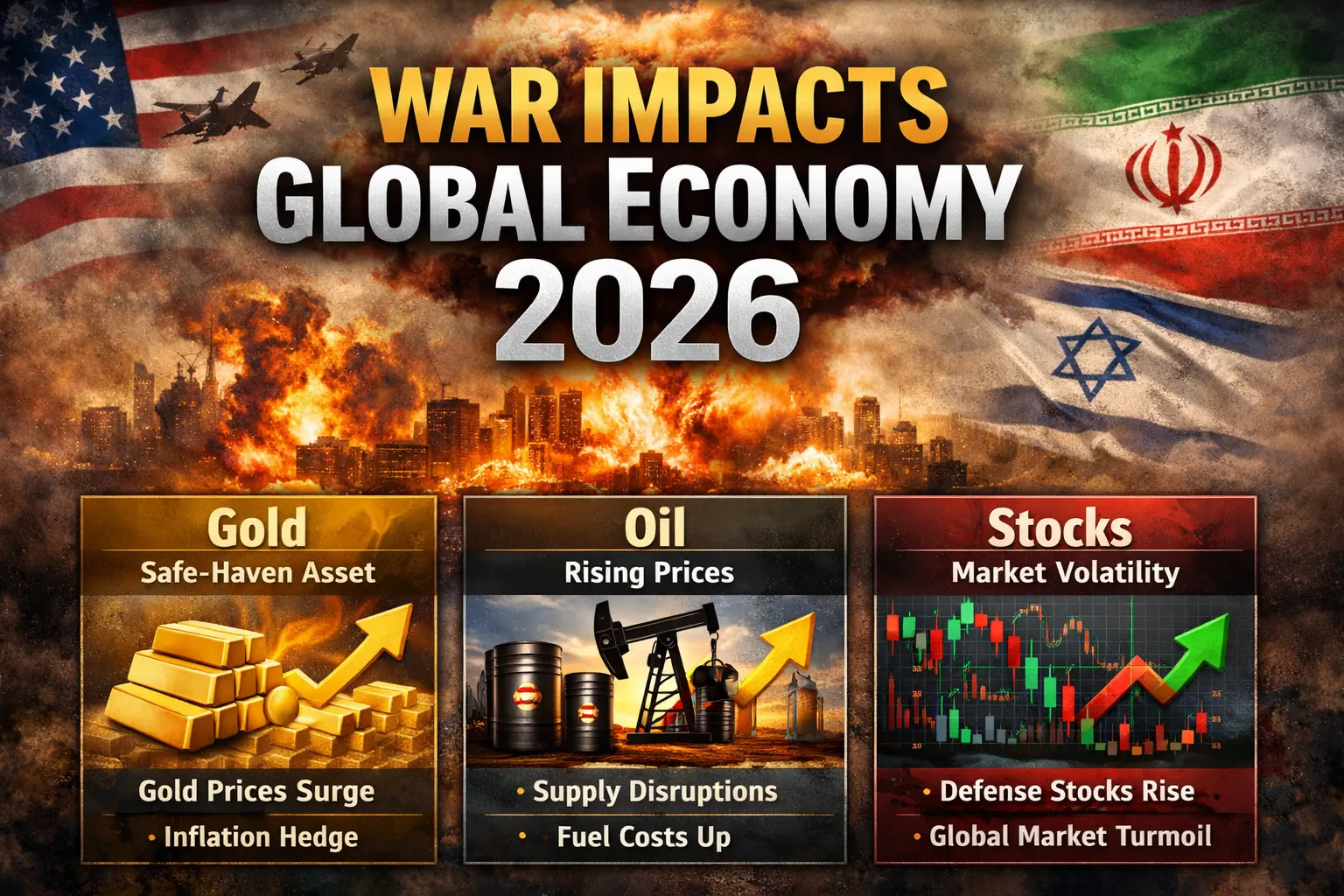
Introduction to War Impact Global Economy 2026
The war impact global economy 2026 is becoming increasingly apparent as tensions between the United States, Israel, and Iran escalate. While conflicts are often regional, their effects ripple across continents, influencing trade, financial markets, commodities, and investment strategies worldwide. The interconnected nature of today’s global economy means that even localized conflicts can trigger major disruptions in trade routes, oil supply, and market stability.
In 2026, analysts are closely monitoring how the ongoing conflict is affecting energy prices, stock markets, and investment patterns. Policymakers, investors, and households alike are seeking strategies to mitigate financial risks caused by the war impact global economy 2026.
Table of Contents
How War Affects Global Trade 2026
Trade Disruptions Through Key Chokepoints
One of the most immediate ways in which the war impact global economy 2026 is visible is through global trade disruptions. The Strait of Hormuz, a critical passage for oil and LNG shipments, has been affected by regional military operations. Tanker traffic has slowed or halted entirely, resulting in delays and increased costs for shipping goods worldwide.
Shipping companies are forced to reroute vessels through longer, riskier paths, causing freight rates to rise and delivery times to lengthen. This illustrates how how war affects global trade 2026, showing the vulnerability of international supply chains to geopolitical instability.
Shipping Delays and Cost Inflation
Global supply chains are highly sensitive to disruptions in key transport corridors. The conflict has led to surging shipping costs, particularly for energy-intensive goods and electronics. These increases are passed on to consumers, further contributing to inflation in affected economies.
Businesses reliant on just-in-time manufacturing have been particularly affected. Delays in raw materials and intermediate goods create bottlenecks, impacting production schedules and profitability.
Long-Term Trade Realignment
Beyond immediate disruptions, the war impact global economy 2026 is prompting long-term trade realignment. Countries are exploring alternative supply chains, regional trading blocs, and local manufacturing solutions to reduce reliance on volatile regions. These adjustments will shape global trade patterns for years to come, highlighting the enduring influence of the war on economic frameworks.
The war impact global economy 2026 is disrupting trade, raising oil prices, and causing stock market volatility. Learn more about these effects in our detailed guide on war impacts global economy, trade, and prices 2026.

War Effect on Oil Prices USA
Energy Market Volatility
The war effect on oil prices USA is one of the clearest examples of the global economic consequences of conflict. Oil prices have spiked in 2026 due to threats to supply in the Middle East. Brent crude and WTI crude have both seen significant increases, reflecting the market’s concern over supply stability.
Impact on Gasoline and Household Budgets
Higher crude prices directly influence gasoline prices in the United States. Consumers face increased costs at the pump, which affects household budgets and discretionary spending. These changes contribute to inflationary pressures, emphasizing the broader war impact global economy 2026.
Global Energy Market Reactions
The surge in oil prices has not only impacted the U.S. but also reverberated through global energy markets. Countries dependent on imported oil and gas have seen rising energy costs, while energy-exporting nations have benefited from higher revenues. This global energy shock underscores how the war effect on oil prices USA extends far beyond domestic markets.
Impact of War on Stock Market
Equity Market Volatility
The impact of war on stock market dynamics is evident in 2026. Investors react to uncertainty with heightened volatility, leading to sharp declines in risk-sensitive equities. European, Asian, and U.S. indices have all experienced fluctuating trends, reflecting concerns over growth, energy costs, and geopolitical risks.
Safe-Haven Assets and Investor Behavior
During periods of uncertainty, investors gravitate toward safe-haven assets. Gold, government bonds, and stable currencies such as the U.S. dollar have seen increased demand. This behavior highlights why gold is considered a gold safe haven during war, providing stability in an otherwise turbulent market.
Sectoral Winners and Losers
Not all sectors are equally affected. Energy and defense stocks have performed well amid rising oil prices and increased military spending, while travel, consumer discretionary, and technology sectors have faced declines. This sectoral shift illustrates the nuanced impact of war on stock market performance.

Gold Safe Haven During War
Rising Demand for Gold
Gold has historically served as a hedge against geopolitical uncertainty, and 2026 is no exception. Investors turn to gold as a store of value during the war impact global economy 2026, seeking to preserve wealth amid inflation and market volatility.
Comparative Performance With Other Commodities
Compared to oil, stocks, and cryptocurrencies, gold often maintains value during conflicts. While oil and equities are highly reactive to supply and market sentiment, gold remains relatively stable, making it a preferred asset in crisis conditions.
Investment Strategies During Geopolitical Tensions
For investors, allocating a portion of the portfolio to gold, treasury bonds, or other defensive assets is a prudent strategy. Financial advisors recommend maintaining liquidity and diversifying investments to mitigate risks associated with the war impact global economy 2026.
Broader Economic Consequences
Inflation Pressures Worldwide
The war impact global economy 2026 has fueled inflation across multiple countries. Rising energy costs and supply chain disruptions contribute to higher prices for goods and services, reducing consumer purchasing power. Central banks face the dual challenge of controlling inflation while sustaining economic growth.
Currency Fluctuations and Emerging Market Vulnerabilities
Currency markets are also affected. Safe-haven currencies such as the U.S. dollar and Swiss franc have strengthened, while emerging market currencies have depreciated. These shifts create challenges for countries with dollar-denominated debt and import dependencies, highlighting the global reach of the war impact global economy 2026.
Risks of Stagflation
The combination of rising inflation and slower economic growth raises concerns of stagflation. Prolonged disruptions in trade, energy, and investment could lead to sustained economic stagnation, demonstrating the serious implications of the war impact global economy 2026.
Best Investments During Geopolitical Tensions
Hedging Strategies for Individuals
Investors can take proactive steps to safeguard wealth. Strategies include:
- Allocating funds to gold and treasury bonds
- Maintaining diversified portfolios
- Holding cash or liquid assets for flexibility
- Investing in energy or defense sectors likely to benefit
These approaches mitigate the risks of volatility and market downturns associated with the war impact global economy 2026.
Sector-Specific Opportunities
Certain sectors perform well during geopolitical instability. Energy, defense, and commodities often provide opportunities for returns when traditional equities falter. Investors focusing on these sectors can leverage market conditions to their advantage.
Conclusion: Navigating the War Impact Global Economy 2026
The war impact global economy 2026 is multifaceted, affecting trade, oil, gold, stocks, and broader economic conditions. Supply chain disruptions, energy market volatility, and inflationary pressures demonstrate the far-reaching effects of conflict.
Understanding how war affects global trade 2026, monitoring the impact of war on stock market, assessing war effect on oil prices USA, and recognizing gold safe haven during war are critical for policymakers, investors, and households seeking financial stability.
By adopting informed investment strategies and monitoring market signals, individuals can protect assets and prepare for continued uncertainty. The 2026 geopolitical crisis serves as a stark reminder of the interconnected nature of modern economies and the importance of proactive financial planning.
FAQs
How does the 2026 war impact the global economy?
The war disrupts trade, raises oil and fuel prices, increases inflation, and creates stock market volatility worldwide.
Will oil prices in the USA continue to rise due to war?
Yes, the conflict affects supply routes, keeping oil prices elevated in the U.S. and globally.
Is gold a safe haven during war in 2026?
Yes, gold maintains value and stability amid geopolitical uncertainty and market volatility.
How does war affect global trade in 2026?
Shipping delays, blocked chokepoints, and rerouted supply chains cause trade disruption and increased costs.
What sectors benefit from geopolitical tensions?
Energy, defense, and certain commodities typically outperform during periods of conflict.
How to Save Money in 2026
Practical strategies to manage your finances and save money consistently throughout 2026.
Best AI Tools to Make Money Online Worldwide
Discover the top AI tools to earn online globally, perfect for beginners and seasoned entrepreneurs.
Global Economy – Wikipedia
Comprehensive overview of the global economy, including trade, finance, and macroeconomic dynamics.