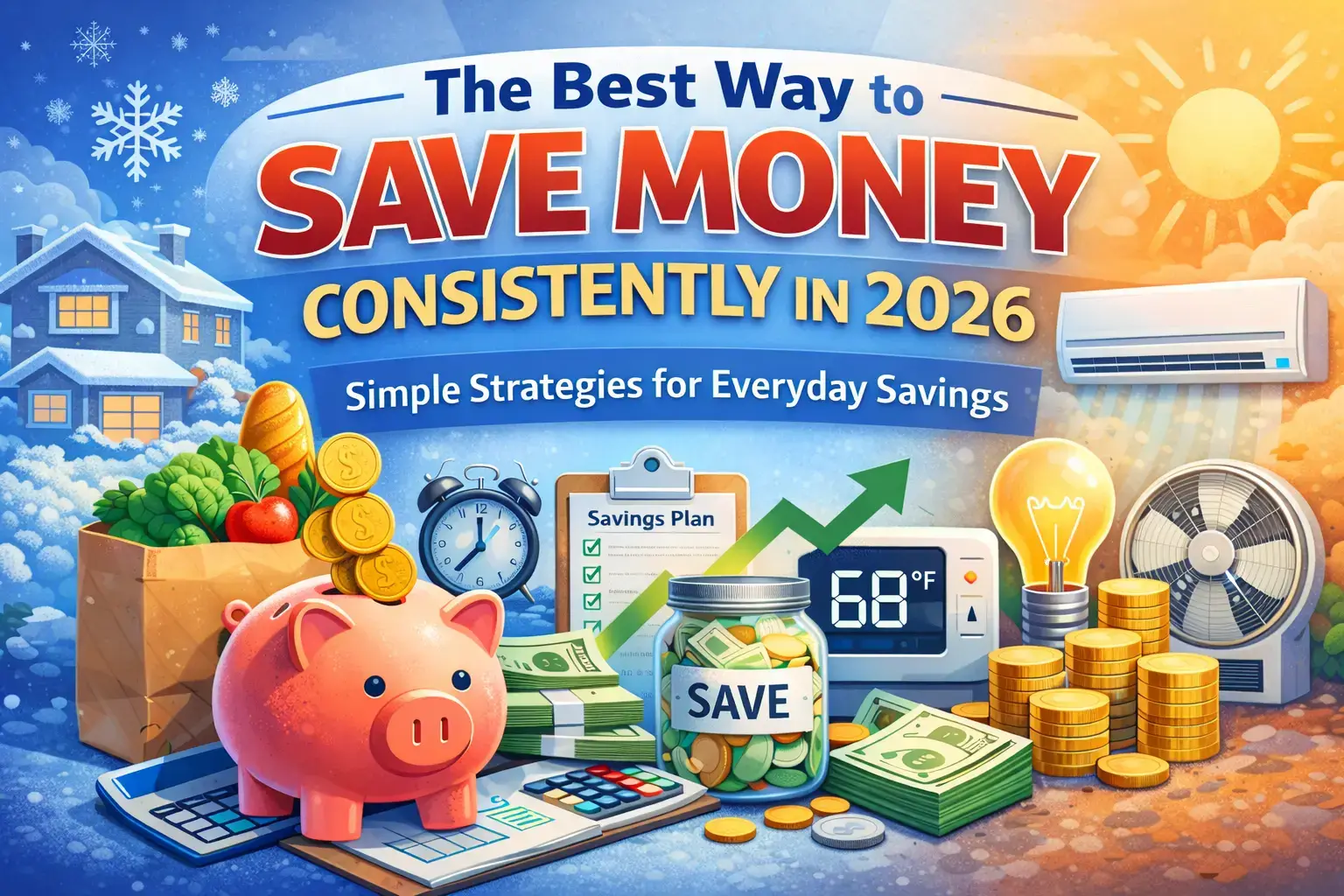
Learning how to save money in 2026 is no longer optional—it’s essential. With grocery prices fluctuating, energy costs rising during winter and summer, and everyday expenses quietly increasing, building a strong money-saving system can protect your financial future.
Whether you’re looking for:
- How to save money on groceries
- How to save money on electric bill in winter
- The best way to save money consistently
- A practical money saving plan
- A motivating money saving challenge
- How to save money fast on a low income
- Clever ways to save money most people ignore
- Or even how can I make money fast to save money fast on a low income
This complete U.S.-focused, beginner-friendly guide breaks everything down step-by-step—with real dollar examples you can apply immediately.
Best AI Tools to Make Money Online Worldwide (Beginner-Friendly Guide)
Use this when talking about ways to make money fast or increase income online to save more in your budget.
Table of Contents for How to Save Money in 2026
The Best Way to Save Money in 2026 (Step-By-Step Foundation)
Before cutting random expenses, you need a system. The best way to save money is not extreme deprivation. It’s small, consistent improvements combined with smart income growth.
Step 1: Know Your Monthly Numbers (How to Save Money in 2026)
If you earn $3,000 per month after taxes, your expenses might look like this:
| Category | Monthly Amount |
|---|---|
| Rent | $1,200 |
| Groceries | $600 |
| Utilities | $250 |
| Car & Gas | $300 |
| Insurance | $200 |
| Subscriptions | $120 |
| Miscellaneous | $200 |
| Savings | $130 |
Most people don’t realize how small leaks destroy savings potential.
If you optimize just 3 categories, you could free up $300–$500 monthly.
Step 2: Follow the 50/30/20 Framework
A popular money saving plan in the U.S. is the 50/30/20 rule:
- 50% Needs
- 30% Wants
- 20% Savings
If you earn $3,000/month:
- Target savings = $600
- Even saving $300/month = $3,600/year
Consistency beats intensity.

How to Save Money on Groceries (Proven 2026 Strategies)
Groceries are one of the easiest categories to optimize quickly.
The average U.S. household spends $400–$800 per month on food. Cutting just 20% could save $80–$160 monthly.
1. Meal Plan Before You Shop
Impulse buying increases grocery spending by 20–30%.
Instead:
- Plan 5 dinners
- Use leftovers intentionally
- Shop once per week
- Build meals around sales
Example:
Cutting two $25 takeout meals weekly:
- $50/week saved
- $200/month
- $2,400/year
That alone can fund a vacation or emergency savings.
2. Buy Store Brands
Store brands are often 15–30% cheaper.
Example:
- Name-brand cereal: $5.49
- Store brand: $3.99
- Savings: $1.50 per item
If you switch 20 items monthly:
- $30 saved per month
- $360 per year
3. Use Cashback Apps
Apps like:
- Rakuten
- Ibotta
- Fetch Rewards
Even earning $20–$40 monthly helps offset inflation.
4. Never Shop Hungry
Research shows shoppers spend 10–15% more when hungry.
On a $600 grocery bill, that’s potentially:
- $60–$90 extra per month
- $720–$1,080 per year
5. Buy in Bulk (Smartly)
Only bulk-buy items you regularly use:
- Rice
- Pasta
- Paper products
- Frozen foods
Avoid bulk perishables unless you freeze them.
How to Save Money on Electric Bill in Winter
Winter electric bills in many U.S. states rise 25–50%.
If your normal bill is $150, winter may push it to $225–$250.
Here’s how to reduce it.
1. Adjust Thermostat Strategically
Set:
- 68°F while home
- 60–62°F while sleeping
Lowering temperature by just 1°F reduces heating costs by 3%.
Example:
$250 bill × 10% reduction = $25 saved monthly.
2. Seal Drafts & Insulate
Use:
- Door draft stoppers ($15)
- Window insulation kits ($20)
- Weather stripping
Potential savings: $150–$300 per winter.
3. Reverse Ceiling Fans
Switch ceiling fans to clockwise (winter mode) to push warm air down.
It’s free and surprisingly effective.
4. Use Space Heaters Wisely
Heating one room instead of the whole house can lower usage.
But only use energy-efficient models and never run unattended.
Best International Money Transfer Apps (Low Fees & Fast Payments) – 2026
— Include this in a section about saving money on international payments or transfers, especially if you mention sending money abroad.
How to Save Money in Summer (How to Save Money in 2026)
During summer, air conditioning becomes the largest utility expense for most U.S. households. In hotter states like Texas, Florida, Arizona, and California, cooling can account for 40–60% of your electric bill.
If your average electric bill is $150 in spring, summer can easily push it to $220–$300.
Learning how to save money in summer starts with understanding how small adjustments reduce long-term costs.
1. Raise Your Thermostat 2–3 Degrees
If you normally set your AC to 70°F, increase it to 74–75°F.
Each degree you raise the thermostat can reduce cooling costs by 2–3%.
Example:
If your summer electric bill is $200:
- 10% reduction = $20 saved per month
- Over 4 summer months = $80 saved
- Over 5 years = $400
Now imagine combining this with other strategies below.
Pro Tip:
Install a programmable or smart thermostat so temperatures automatically increase while you’re at work. You won’t even notice the difference.
2. Block Direct Sunlight
Sunlight dramatically increases indoor temperatures.
Use:
- Blackout curtains
- Reflective blinds
- Thermal drapes
- Window tint film
Blocking peak sunlight can reduce cooling demand by 10–15%.
Real Impact Example:
If your AC runs 10 hours daily, reducing demand by 15% could lower runtime by 1.5 hours daily — saving significant energy over 90 days.
3. Run Appliances at Night
Many utility providers offer time-of-use pricing, meaning electricity costs less during off-peak hours.
Run at night:
- Dishwasher
- Washer
- Dryer
- Oven
Dryers and ovens generate heat that forces your AC to work harder. Running them after 8–9 PM reduces both cooling strain and energy cost.
Check your local provider’s rate schedule for potential savings.
4. Use Ceiling Fans Correctly
Ceiling fans don’t cool rooms — they cool people.
Using fans allows you to raise the thermostat by 2–4 degrees without feeling warmer.
A fan uses about $1–$2 per month in electricity.
An AC unit costs much more.
5. Replace Air Filters Monthly
Dirty filters restrict airflow and force your system to work harder.
A $10–$20 filter replacement can reduce energy usage by 5–10%.
Maintenance is one of the most overlooked clever ways to save money.
A Money Saving Plan That Actually Works
A money saving plan fails when it’s too complicated. Simplicity and automation win.
1. Automate Savings (Pay Yourself First)
The best way to save money consistently is automation.
Set up an automatic transfer:
- $50/week = $200/month
- $200/month = $2,400/year
- $2,400/year for 5 years = $12,000 (before interest)
Automation removes emotional decision-making. If you don’t see the money, you don’t spend it.
2. Build an Emergency Fund First
Before investing or aggressive saving goals, build stability.
Step 1: Starter Emergency Fund
Save $1,000 quickly for:
- Car repairs
- Medical bills
- Small emergencies
Step 2: Full Emergency Fund
3–6 months of expenses.
If monthly expenses = $2,500
Target = $7,500–$15,000
This prevents:
- Credit card debt
- Personal loans
- Financial panic
An emergency fund is financial security.
3. Separate Savings Accounts
Psychology matters.
Instead of one large account, create categories:
- Emergency fund
- Vacation fund
- Home maintenance
- Car repairs
- Holiday spending
Mental separation improves discipline and prevents dipping into long-term savings.
Money Saving Challenge Ideas That Actually Work
A money saving challenge builds momentum and discipline.
1. 52-Week Money Saving Challenge
Save:
Week 1: $1
Week 2: $2
…
Week 52: $52
Total saved: $1,378
If you reverse it (start high, go low), it feels easier toward the end of the year.
2. No-Spend Challenge (7 or 30 Days)
For a set period, spend only on essentials:
✔ Rent
✔ Utilities
✔ Groceries
❌ Takeout
❌ Online shopping
❌ Subscriptions
Many people save:
- $150–$300 in one week
- $500–$1,000 in 30 days
This resets spending habits.
3. $5 Bill Challenge
Every time you receive a $5 bill, save it.
Average savings:
- $500–$1,000 annually
Small psychological tricks produce big savings.
How to Save Money Fast on a Low Income
If you earn $2,000 per month, strategy becomes critical.
Saving is still possible — but prioritization matters.
1. Cut Fixed Expenses First
Fixed costs create the biggest impact.
Negotiate:
- Internet provider
- Phone plan
- Insurance
- Streaming bundles
Saving just $60 per month:
- $720 yearly
- $3,600 over 5 years
One phone call can equal weeks of small savings efforts.
2. Cancel Hidden Subscriptions
Five subscriptions at $15 average:
- $75/month
- $900/year
Audit your bank statement line-by-line.
Most people are surprised by forgotten recurring charges.
3. Reduce Housing Costs (If Possible)
Housing is typically 30–50% of income.
Example:
$1,200 rent → $700 with roommate
$500 saved monthly
$6,000 yearly
That single move changes your financial trajectory.
How Can I Make Money Fast to Save Money Fast on a Low Income?
Sometimes cutting expenses isn’t enough. Increasing income accelerates everything.
1. Sell Unused Items
The average household contains $500–$2,000 worth of unused items.
Sell on:
- Facebook Marketplace
- eBay
Common items:
- Electronics
- Tools
- Furniture
- Clothing
- Old phones
Declutter + earn cash.
2. Gig Work
Flexible income through:
- DoorDash
- Uber
Even $100/week extra:
- $400/month
- $4,800/year
That could fully fund an emergency account in 12–18 months.
3. Monetize a Skill
Ask yourself:
Can you:
- Tutor math or English?
- Design graphics?
- Write blog content?
- Repair electronics?
- Offer lawn services?
Even earning an extra $300 monthly increases savings potential dramatically.
Income growth multiplies savings power.
Clever Ways to Save Money Most People Ignore
These clever ways to save money are small but powerful.
1. Pay Yourself First
Savings is not optional.
Treat it like rent.
Automatic transfer on payday ensures consistency.
2. Use Cash for Variable Spending
The envelope method limits overspending.
When cash is gone — spending stops.
Great for:
- Dining out
- Entertainment
- Clothing
3. Buy Quality Over Cheap
Cheap items cost more long-term.
Example:
$30 shoes lasting 6 months
vs
$90 shoes lasting 3 years
Over 3 years:
Cheap = $180
Quality = $90
Quality saves money.
4. Review Insurance Annually
Auto and home insurance rates change constantly.
Switching providers could save:
$300–$800 annually.
5. Avoid Lifestyle Inflation
When income rises, increase savings — not spending.
If you get a $400 raise:
Save $300.
Spend $100.
That’s how wealth builds quietly.
How Can a Budget Help You Reach Your Financial Goals?
A budget isn’t restriction — it’s direction.
1. It Assigns Every Dollar a Job
Without budgeting:
Money disappears.
With budgeting:
Every dollar has a purpose.
2. It Reduces Financial Anxiety
Clarity reduces stress.
When:
- Bills are scheduled
- Savings are automated
- Spending is tracked
Financial confidence increases.
3. It Accelerates Goals
Example: $10,000 emergency fund.
Without plan:
$100/month → 8+ years
With structured plan:
$400/month → 2 years
Time matters.
Cutting Expenses vs Increasing Income
| Strategy | Monthly Impact | Annual Impact |
|---|---|---|
| Cut groceries 20% | $120 | $1,440 |
| Lower utilities 15% | $30 | $360 |
| Cancel subscriptions | $75 | $900 |
| Side hustle $100/week | $400 | $4,800 |
Income growth often has the biggest impact — but combining both strategies wins.
Common Money Saving Mistakes
- Extreme budgeting leading to burnout
- Ignoring small recurring charges
- No emergency fund
- Not tracking spending
- Saving without long-term investing
- Relying only on cutting instead of increasing income
Balance is the key to sustainability.
How Do Banks Make Money in 2026? Simple Step‑by‑Step Guide
— Use this to add context in parts of the article that explain how financial systems work (e.g., savings accounts, interest, fees).
Long-Term Wealth Strategy After Saving
Saving protects you.
Investing grows you.
After building emergency savings, consider:
- High-yield savings accounts
- 401(k) contributions (especially employer match)
- IRA accounts
- Low-cost index funds
Over 10–20 years, investing transforms disciplined saving into wealth.
Why Saving Is Important
Saving money is important because it gives you financial security, stability, and freedom. Life is unpredictable, and unexpected expenses—like medical bills, car repairs, or job loss—can happen at any time. Without savings, many people rely on credit cards or loans, which often come with high interest rates and long-term debt. Having money set aside protects you from financial emergencies and reduces stress.
Saving also gives you peace of mind. When you have an emergency fund, you don’t panic over small setbacks. Even a modest amount, such as $1,000, can make a big difference in handling surprise expenses. Over time, building 3–6 months of living expenses creates a strong financial safety net.
Another reason saving is important is that it helps you reach your goals faster. Whether you want to buy a home, start a business, travel, or retire comfortably, saving consistently turns those goals into reality. For example, saving $300 per month adds up to $3,600 per year. In five years, that becomes $18,000—without even including investment growth.
Saving also builds discipline and confidence. When you develop the habit of paying yourself first, you gain control over your money instead of living paycheck to paycheck. In the long term, saving is the foundation of wealth. It allows you to invest, grow your money, and achieve financial independence.
Final Thoughts: How to Save Money in 2026
Learning how to save money in 2026 isn’t about deprivation. It’s about awareness, systems, and intentional decisions.
$5/day = $150/month
$150/month = $1,800/year
$1,800/year for 10 years = $18,000 (without investment growth)
Small habits create financial freedom.
Whether you’re focused on:
- How to save money on groceries
- How to save money on electric bill in winter
- Creating a powerful money saving plan
- Starting a money saving challenge
- Or figuring out how to save money fast on a low income
The formula is simple:
- Reduce waste
- Increase income
- Automate savings
- Stay consistent
Your financial future is built one decision at a time.
Disclaimer:
This content is for educational purposes only and does not constitute financial advice. Individual financial situations vary. Consult a qualified financial professional for personalized guidance.
FAQs: How to Save Money in 2026
Why is important how to save money in 2026?
Saving money is important because it protects you from emergencies, reduces financial stress, and helps you reach long-term goals like buying a home or retiring comfortably.
How much should I save each month?
A common recommendation is to save at least 20% of your income. If that’s not possible, start with 5–10% and increase it gradually.
What is an emergency fund?
An emergency fund is money set aside for unexpected expenses like medical bills, car repairs, or job loss. Experts suggest saving 3–6 months of living expenses.
Can I save money on a low income?
Yes. Start small, cut unnecessary expenses, and save consistently—even $25 or $50 per month makes a difference over time.
What is the fastest way to start saving?
Track your expenses, cut small unnecessary costs (like unused subscriptions), and set up automatic transfers to your savings account.
Budgeting → https://en.wikipedia.org/wiki/Budget
Emergency fund → https://en.wikipedia.org/wiki/Emergency_fund
Personal finance → https://en.wikipedia.org/wiki/Personal_finance
Energy conservation → https://en.wikipedia.org/wiki/Energy_conservation
Inflation → https://en.wikipedia.org/wiki/Inflation