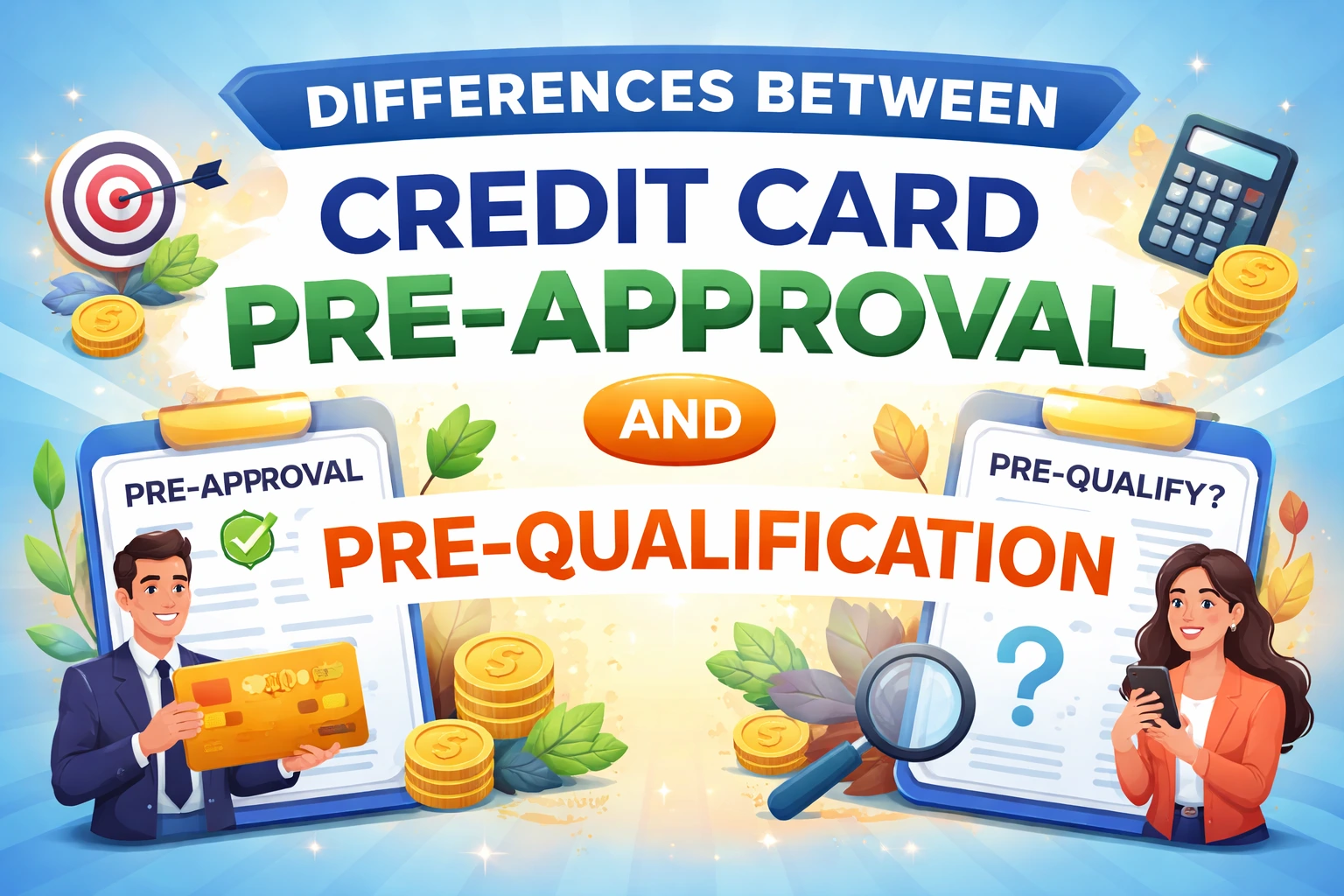
Introduction:Credit Card Pre-Approval vs Pre-Qualification
When searching for a new credit card, you may have come across terms like pre-approval and pre-qualification. While they sound similar, confusing them can impact your credit score and your chances of getting approved for the card you want.
In this guide, we’ll break down the key differences between credit card pre-approval and pre-qualification, explain how each affects your credit, and provide actionable tips to improve your approval odds. By the end, you’ll know exactly how to navigate these terms and make informed financial decisions in the USA.
What is Credit Card Pre-Qualification?
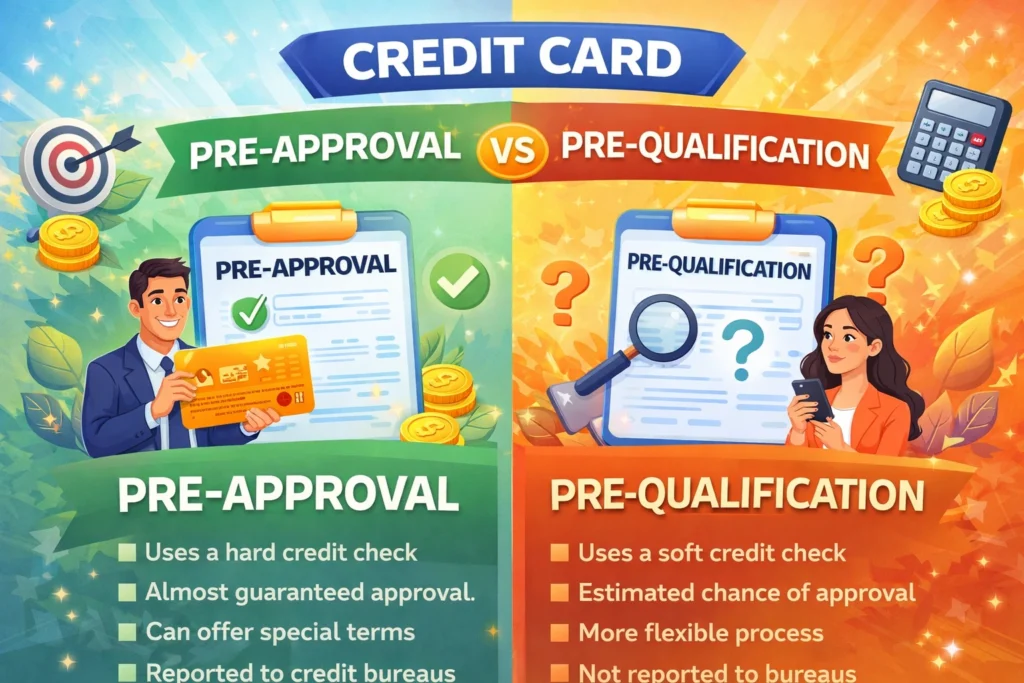
Pre-qualification is an initial assessment by a credit card issuer to determine your likelihood of approval. It is usually based on a soft credit check, which does not affect your credit score.
Key Features of Pre-Qualification
- Soft Inquiry: Your credit report is reviewed, but your score remains unaffected.
- No Guarantee: Pre-qualification does not guarantee approval; it’s an estimate.
- Quick Process: Often available online within minutes.
Example: Sarah received a pre-qualification offer for a cashback credit card. While this showed she might qualify, her application could still be denied after a hard credit check.
Actionable Tip: Use pre-qualification offers to compare cards without hurting your credit. It’s a safe way to explore options if you are planning to apply for multiple cards.
What is Credit Card Pre-Approval?
Pre-approval, on the other hand, is a step closer to actual approval. It usually involves a soft credit inquiry initially, but the card issuer may already have enough information to guarantee approval, subject to verification.
Key Features of Pre-Approval
- Higher Approval Probability: Pre-approved offers often indicate a strong chance of being approved.
- Soft Inquiry: Your credit score is not affected until you formally apply.
- May Include Special Benefits: Some pre-approved offers come with exclusive bonuses or lower interest rates.
Example: John received a pre-approval offer for a travel rewards card. Because his credit profile matched the bank’s criteria, he was almost guaranteed approval after submitting the application.
Actionable Tip: Pre-approval can save time and reduce stress. Check the offer details carefully, as accepting may involve a hard inquiry later.
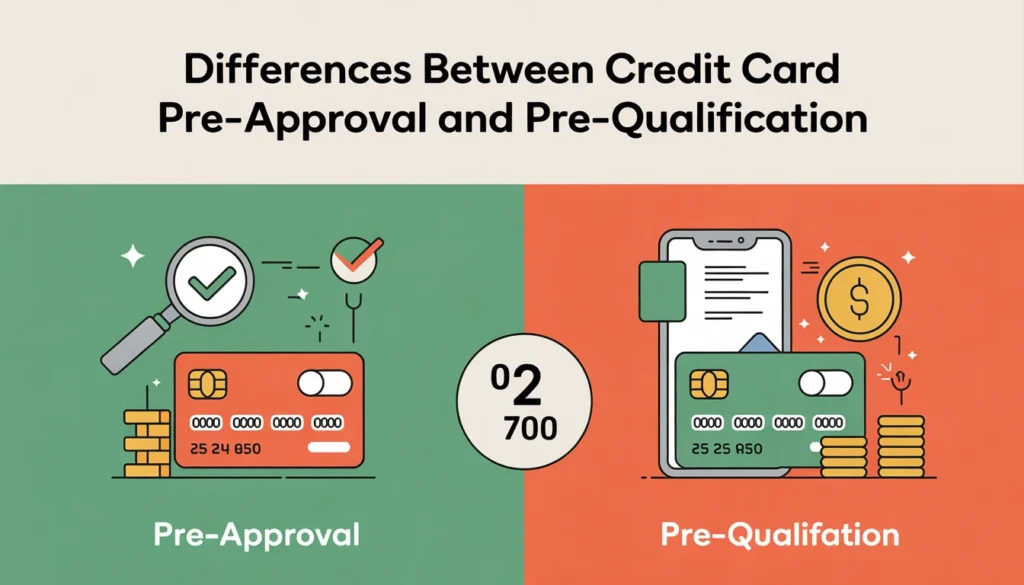
Table of Contents
Key Differences Between Pre-Qualification and Pre-Approval
Understanding the differences can help you choose the right path when applying for a credit card. Here’s a quick comparison:
| Feature | Pre-Qualification | Pre-Approval |
|---|---|---|
| Credit Check Type | Soft Inquiry | Soft Inquiry initially, Hard Inquiry on application |
| Approval Guarantee | No | Often yes, subject to verification |
| Impact on Credit Score | None | None initially; hard inquiry may follow |
| Offer Specificity | General estimate | Usually a specific card offer |
| Benefits | None guaranteed | May include bonuses or special rates |
Insight: If your goal is to explore options without affecting your credit, pre-qualification is safer. If you are confident in your credit profile and want targeted offers, pre-approval is more efficient.
How Pre-Approval and Pre-Qualification Affect Your Credit Score
One of the biggest concerns for card applicants is the impact on credit scores:
- Soft Inquiries: Both pre-qualification and pre-approval typically involve soft pulls, which do not affect your score.
- Hard Inquiries: Once you formally apply, a hard inquiry occurs, potentially lowering your score slightly (usually 3–5 points).
- Multiple Applications: Applying for multiple cards without pre-qualification or pre-approval can negatively affect your score, so plan carefully.
Pro Tip: Always check if the offer is soft or hard pull before applying. Websites like Experian or Equifax provide guidance on how inquiries impact your credit.
When to Use Pre-Qualification
Pre-qualification is best when:
- You are shopping around for the best card deals.
- You want to avoid multiple hard inquiries on your credit.
- You have a limited credit history and want to see where you stand.
Example: Emily was unsure about her credit score. She pre-qualified for three different rewards cards and chose the one with the highest points potential before applying.
When to Use Pre-Approval
Pre-approval is ideal when:
- You have a strong credit profile and want a higher chance of approval.
- You want exclusive offers, such as bonus points or lower APRs.
- You want to save time and avoid guessing which cards you qualify for.
Example: Mark received a pre-approval for a travel card with 50,000 bonus points. Because he met all requirements, he applied confidently and got instant approval.
Step-by-Step Actionable Tips for Credit Card Pre-Qualification
Goal: Explore credit card options safely without affecting your credit score.
- Check Your Credit Score First
- Use free tools from Experian or Credit Karma.
- Know your FICO score range (Poor: <580, Fair: 580–669, Good: 670–739, Very Good: 740–799, Excellent: 800+).
- This helps you target cards you’re more likely to pre-qualify for.
- Use Pre-Qualification Tools Online
- Most major banks and credit card comparison sites offer soft-pull pre-qualification checks.
- Examples: Discover, Chase, Capital One, CreditCards.com.
- Input basic information: income, existing debt, and personal details.
- Compare Multiple Offers
- Don’t stop at the first offer—pre-qualification is free and safe.
- Compare APR, annual fees, rewards, and benefits.
- Shortlist the top 2–3 options that fit your spending habits.
- Check Eligibility Requirements
- Each card may have minimum credit score requirements or income limits.
- Pre-qualification often gives an estimated likelihood of approval—pay attention to it.
- Plan Your Formal Application
- Once you identify the best option, plan to apply formally.
- Remember: the formal application triggers a hard inquiry, so space out applications to minimize credit score impact.
Step-by-Step Actionable Tips for Credit Card Pre-Approval
Goal: Maximize your chances of approval while accessing special offers.
- Look for Pre-Approval Offers
- Banks often send targeted pre-approval offers via email or mail.
- You can also check online via card issuer websites.
- Example: John received a pre-approval email from Chase offering a bonus points card with almost guaranteed approval.
- Verify Soft vs Hard Pull
- Most pre-approvals start with a soft pull. Confirm before you accept to ensure your score won’t drop.
- Only the formal application usually triggers a hard inquiry.
- Review Offer Details Thoroughly
- Check for bonus offers, rewards, APR, fees, and terms.
- Pre-approved offers often come with special perks, like higher reward rates or lower APR for a limited time.
- Ensure Eligibility
- Verify your credit score and debt-to-income ratio meet the card issuer’s typical range.
- Clean up any overdue accounts or high credit utilization before applying.
- Submit Application Strategically
- Apply online for convenience; you’ll often get an instant decision.
- If denied, review the reason provided—it’s useful for future applications.
- Follow-Up and Track Your Credit
- Use Credit Sesame or similar tools to track post-application credit changes.
- Maintaining good credit behavior after approval ensures you can access better cards in the future.
Additional Practical Tips to Improve Approval Odds
- Keep Credit Utilization Low: Below 30% is ideal.
- Pay Bills on Time: Payment history is 35% of FICO score weight.
- Limit Multiple Applications: Space applications 3–6 months apart.
- Monitor Your Credit Reports: Check for errors and dispute inaccuracies.
- Consider Secured Cards if Needed: Great for building or rebuilding credit before attempting pre-approval.
FAQs About Credit Card Pre-Approval and Pre-Qualification
Does pre-qualification affect my credit score?
No, pre-qualification usually involves a soft credit inquiry, which does not affect your credit score.
Is pre-approval a guarantee of getting the card?
Pre-approval indicates a strong chance of approval, but verification is still required. A hard credit pull may occur after you apply.
Can I get multiple pre-approvals at the same time?
Yes, multiple pre-approvals are possible without hurting your score. However, applying for all at once may trigger multiple hard inquiries later.
How can I increase my chances of pre-approval?
Improve your credit score, reduce existing debt, pay bills on time, and keep credit utilization below 30%.
Should I always choose pre-approval over pre-qualification?
Not necessarily. Use pre-qualification to explore options without impacting your credit and pre-approval when you’re confident in your eligibility.
Conclusion
Understanding the difference between credit card pre-approval and pre-qualification can save you time, protect your credit score, and increase your chances of getting the best offers in 2026.
- Pre-qualification: Best for exploring options safely.
- Pre-approval: Best for targeted offers and higher approval odds.
By using both strategically, you can make smarter financial decisions, access better rewards, and maintain a healthy credit profile. Start with pre-qualification to explore your options and move to pre-approval when you’re confident in your credit standing.
Before applying, check your credit score to understand where you stand. You can learn more about what constitutes a good credit score in the USA here: What Is a Good Credit Score in USA 2026.
Keep your credit utilization below 30% to increase your chances of approval. Learn more about managing your credit effectively in our guide: Credit Utilization Ratio Explained.
External Authority Links: