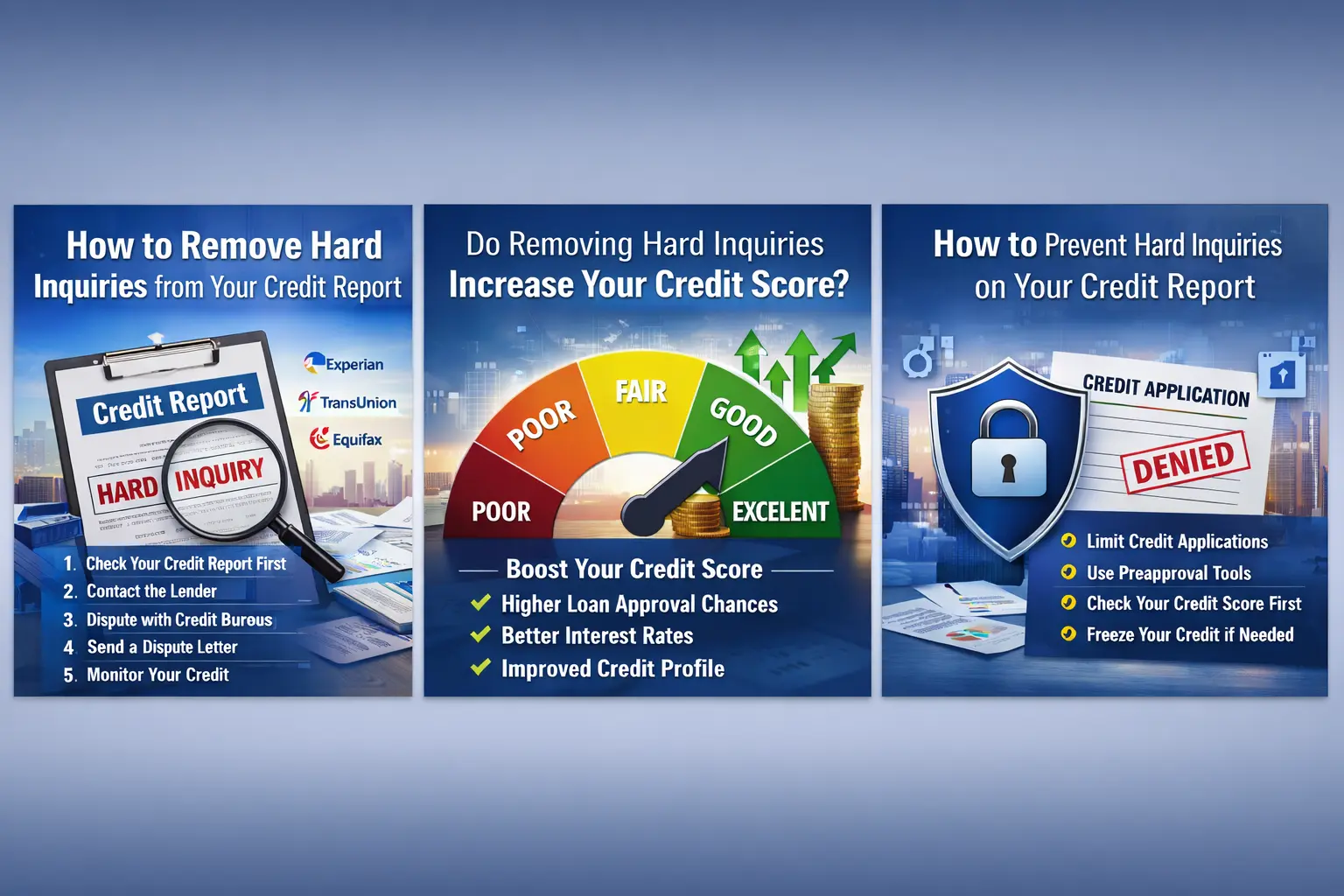
A hard inquiry on your credit report can slightly lower your credit score and affect your chances of getting approved for loans or credit cards. Many people search for ways to remove hard inquiries from credit report quickly to improve their financial profile.
Hard inquiries usually appear when a lender checks your credit during applications for loans, credit cards, or financing. While most hard inquiries are legitimate, sometimes unauthorized or incorrect inquiries may appear.
In this guide, you’ll learn how to remove hard inquiries from a credit report, when they can be removed, and how to dispute them with major credit bureaus like Experian, TransUnion, and Equifax.
What Is a Hard Inquiry on a Credit Report?
A hard inquiry (also called a hard pull) happens when a lender checks your credit report to evaluate your creditworthiness.
Hard inquiries usually occur when you:
- Apply for a credit card
- Apply for a personal loan
- Apply for a mortgage
- Apply for car financing
Each hard inquiry may reduce your credit score by a few points temporarily.
Soft inquiries, on the other hand, do not affect your credit score. For example, checking your credit using services like Credit Karma is considered a soft inquiry.
If you want to increase your income while improving your finances, check out 10 Best Freelance Jobs for Beginners for simple ways to start earning online.

Table of Contents for Remove Hard Inquiries from Credit Report
How Hard Inquiries Affect Your Credit Score
Hard inquiries are a small factor in your credit score calculation, but they can still have an impact.
Effects of hard inquiries include:
- Lower credit score (usually 3–10 points)
- Reduced chances of loan approval
- Signals higher credit risk to lenders
However, the impact decreases over time.
Most hard inquiries stay on your credit report for two years, but they only affect your score for about 12 months.
It’s also helpful to understand the difference between payment methods like Credit Card vs Debit Card, which explains how each option affects your finances.

How to Remove Hard Inquiries from Credit Report
If you notice an incorrect or unauthorized hard inquiry, you may be able to remove it.
Here are the most effective methods.
1. Check Your Credit Report First
Before disputing anything, review your credit report carefully.
You should check:
- Date of inquiry
- Name of lender
- Whether you applied for that credit
You can get free reports from the three major bureaus.
Look for suspicious or unauthorized inquiries that you did not approve.
2. Contact the Lender Directly
Sometimes lenders add inquiries accidentally.
You can contact the lender and ask them to remove the inquiry if:
- You never applied for credit
- The inquiry is incorrect
- Your identity was used without permission
Provide documentation if necessary.
3. Dispute the Inquiry with Credit Bureaus
If the lender does not respond, you can dispute the inquiry directly with the credit bureaus.
Submit a dispute with:
- Experian
- TransUnion
- Equifax
The bureau will investigate the inquiry and respond within 30 days.
If the inquiry cannot be verified, it will be removed from your report.
4. Send a Credit Inquiry Dispute Letter
Another method is sending a formal dispute letter.
Include:
- Your personal information
- The inquiry you want removed
- Reason for dispute
- Supporting documents
This method works well for unauthorized hard inquiries.
5. Monitor Your Credit Regularly
Regular monitoring helps detect suspicious activity early.
Credit monitoring services notify you when:
- A new inquiry appears
- Your credit score changes
- A new account is opened
This helps protect your credit profile from fraud.
Can You Remove Hard Inquiries in 15 Minutes?
Many websites claim you can remove hard inquiries in 15 minutes, but this is often misleading.
In reality:
- Legitimate inquiries cannot be removed instantly
- Disputes require investigation time
- Credit bureaus may take up to 30 days
However, if the inquiry is clearly fraudulent, the process may move faster.
Do Removing Hard Inquiries Increase Credit Score?
Yes, removing hard inquiries can improve your credit score slightly.
Benefits include:
- Improved credit profile
- Higher approval chances for loans
- Better interest rates
However, the impact depends on your overall credit history.
Payment history and credit utilization still play a much larger role.
Improving your credit report also requires understanding how credit scores work. Learn more in our guide What Is a Credit Score and How Does It Work?.
How to Prevent Hard Inquiries in the Future
Protecting your credit score requires careful management of how often lenders check your credit report. Since hard inquiries can slightly lower your score, it’s important to minimize unnecessary credit checks. Follow these strategies to prevent hard inquiries in the future.
1. Limit Credit Applications
Every time you apply for a new credit card, loan, or financing, the lender usually performs a hard credit check. Applying for multiple credit accounts within a short time can create several hard inquiries on your credit report.
To avoid this:
- Only apply for credit when you truly need it
- Avoid applying for multiple credit cards at once
- Research approval requirements before submitting an application
By limiting unnecessary applications, you can keep your credit profile healthier and reduce the number of inquiries.
2. Check Your Credit Score Before Applying
Before applying for any loan or credit card, review your credit score and report. This helps you determine whether you meet the lender’s minimum requirements.
Many people use credit monitoring tools such as Credit Karma to check their credit score without affecting it. These checks are considered soft inquiries and do not harm your credit score.
Knowing your credit score beforehand can prevent rejected applications and unnecessary hard inquiries.
3. Use Prequalification or Preapproval Tools
Many lenders now offer prequalification tools that allow you to see whether you may qualify for a credit card or loan before submitting a full application.
Prequalification usually uses a soft credit check rather than a hard inquiry. This means you can explore potential offers without lowering your credit score.
Banks and credit bureaus like Experian, TransUnion, and Equifax often provide prequalification services to help consumers make better financial decisions.
4. Monitor Your Credit Regularly
Monitoring your credit report helps you detect suspicious activity early. If an unauthorized lender checks your credit, you will be able to identify the inquiry quickly.
Regular monitoring helps you:
- Track new credit inquiries
- Detect possible identity theft
- Maintain accurate credit records
You should review your credit report at least a few times each year to ensure all information is correct.
5. Freeze Your Credit if You Suspect Fraud
If you believe someone may be using your identity to apply for credit, placing a credit freeze can help prevent new inquiries.
A credit freeze stops lenders from accessing your credit report without your permission. As a result, no new credit accounts can be opened in your name until you remove the freeze.
You can request a freeze directly from credit bureaus such as Experian, TransUnion, and Equifax.
6. Avoid Multiple Loan Applications at the Same Time
Applying for several loans in a short period can create multiple hard inquiries. While some credit scoring models group similar inquiries (such as mortgage or auto loan shopping) within a short time window, too many applications can still negatively affect your credit profile.
Try to:
- Compare lenders before applying
- Apply within a short comparison window for similar loans
- Avoid unnecessary credit checks

Conclusion: Remove Hard Inquiries from Credit Report
Understanding how to remove hard inquiries from a credit report is an important step toward maintaining a strong credit profile. While legitimate hard inquiries usually remain on your report for up to two years, unauthorized or incorrect inquiries can often be disputed and removed.
By regularly checking your credit report, limiting unnecessary credit applications, and using prequalification tools, you can reduce the chances of new hard inquiries affecting your score. Monitoring your credit through trusted platforms and staying aware of your financial activity also helps protect you from errors or identity theft.
If you notice suspicious inquiries, you should dispute them quickly with major credit bureaus like Experian, TransUnion, and Equifax. Taking these steps can help improve your credit health and increase your chances of getting approved for loans, credit cards, and better financial opportunities in the future.
FAQs – How to Remove Hard Inquiries from Credit Report
How can I remove hard inquiries from my credit report fast?
To remove hard inquiries from credit report, first check whether the inquiry is legitimate. If it is unauthorized or incorrect, you can dispute it with credit bureaus like Experian, TransUnion, and Equifax. The investigation process usually takes up to 30 days, and unverified inquiries may be removed.
Can hard inquiries be removed in 15 minutes?
Many websites claim you can remove hard inquiries in 15 minutes, but in most cases this is not accurate. Legitimate inquiries cannot be removed instantly. However, if an inquiry is fraudulent or added by mistake, submitting a dispute online may start the removal process quickly.
Do hard inquiries affect your credit score?
You can dispute hard inquiries for free directly through the official websites of the credit bureaus.
How to dispute hard inquiry on credit report?
Identify the inquiry on your report, submit a dispute to the credit bureau, and wait for verification results.
Does removing hard inquiries increase credit score?
Yes, removing hard inquiries from a credit report may slightly improve your credit score.
How long do hard inquiries stay on credit report?
Hard inquiries stay on your credit report for up to two years, but they affect your score for about 12 months.