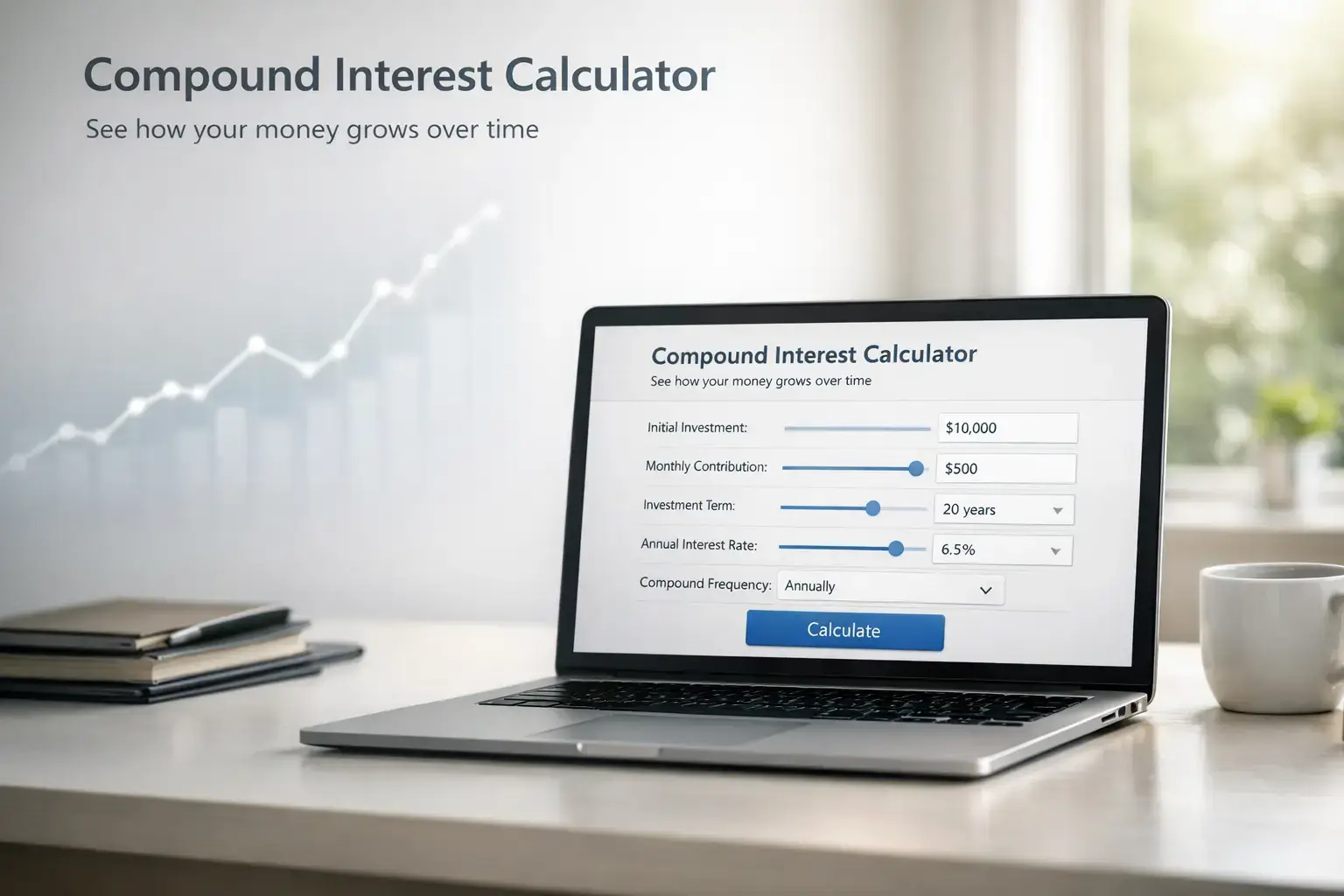
A compound interest calculator is one of the most powerful tools in personal finance. It helps you understand how your money can grow over time when interest earns interest. Whether you are saving for retirement, building long-term wealth, or planning investment goals, compound interest plays a critical role.
Many people underestimate how powerful compounding can be. Even small, consistent contributions can turn into significant wealth over time. This guide explains how compound interest works, how to calculate it, and how to use a compound interest calculator effectively.
Tracking your expenses regularly makes it easier to see how savings grow over time. Using a daily expense tracker app helps you control spending and free up more money to invest and benefit from compound interest.
Table of Contents
- High-interest debt can cancel out the benefits of compounding. Following smart credit card tips can help you reduce interest payments and redirect that money toward long-term investments.

What Is Compound Interest?
Simple Definition of Compound Interest
Compound interest is interest calculated not only on your original investment (principal) but also on the interest earned over time. In simple words, it means earning interest on interest.
Unlike simple interest, where returns are calculated only on the original amount, compound interest allows your money to grow faster because each interest period builds on the last.
Why Compound Interest Matters for Investors
Compound interest is the foundation of long-term investing. It rewards:
- Time in the market
- Consistency
- Patience
The longer your money stays invested, the more powerful compounding becomes. This is why starting early is often more important than investing large amounts later.
How Does Compound Interest Work?
Interest on Interest Explained
When interest is added to your balance, future interest calculations include both your original money and the accumulated interest. Over time, growth accelerates.
For example:
- Year 1: You earn interest on $1,000
- Year 2: You earn interest on $1,000 + last year’s interest
- Year 3: Interest keeps stacking
This snowball effect is what makes compound interest so powerful.
Compounding Frequency (Daily, Monthly, Annually)
Compounding frequency determines how often interest is added to your balance:
- Daily compounding
- Monthly compounding
- Annual compounding
More frequent compounding leads to slightly higher returns, especially over long periods. A compound interest calculator daily vs monthly comparison clearly shows how frequency impacts growth.

Hidden bank fees quietly reduce your savings potential. Understanding common bank fees and charges ensures more of your money stays invested and continues compounding.
Compound Interest Formula Explained
The Compound Interest Formula
The standard compound interest formula is:
A = P (1 + r/n)^(nt)
Where:
- A = final amount
- P = principal (starting amount)
- r = annual interest rate
- n = number of compounding periods per year
- t = time in years
This formula forms the foundation of every interest compounding calculator.
Example of Compound Interest Calculation
If you invest $5,000 at 7% annual interest, compounded monthly for 20 years, the final amount is significantly higher than with simple interest. A compound interest calculator makes these calculations instant and error-free.
How to Use a Compound Interest Calculator
Step-by-Step Guide to Using the Calculator
A compound interest calculator for beginners is simple to use:
- Enter your initial investment
- Add the annual interest rate
- Choose compounding frequency
- Select time period
- Add regular contributions (optional)
The calculator instantly shows how much your money may grow.
Required Inputs (Principal, Rate, Time, Contributions)
Most calculators require:
- Principal amount
- Interest rate
- Time horizon
- Contribution amount (monthly or annual)
Using a compound interest calculator with monthly contributions shows how consistent saving boosts long-term results.
Choosing the right banking account plays a major role in compounding growth. The right banking accounts can offer higher interest rates, lower fees, and better long-term returns.
Common Mistakes When Using a Compound Interest Calculator
Many people use a compound interest calculator but still misunderstand the results. Avoiding these common mistakes will help you make better financial decisions.
Ignoring Inflation
Most compound interest calculator results show nominal growth, not inflation-adjusted growth. Inflation reduces purchasing power over time, especially for long-term investments.
For example, earning 8% annually may feel strong, but if inflation averages 3%, your real return is closer to 5%. When planning long-term goals like retirement, always mentally adjust results for inflation.
Tip: Be conservative when interpreting long-term projections.
Assuming Returns Are Guaranteed
A compound interest calculator shows projected growth, not guaranteed results. Market-based investments like stocks and mutual funds fluctuate yearly.
Using the calculator helps estimate outcomes, but real-world investing involves risk. This is why long-term investing and diversification matter.
Forgetting Fees and Taxes
Management fees, account fees, and taxes can reduce compounding significantly over decades.
Even a 1% annual fee can reduce final returns by tens of thousands of dollars over time. When using an investment growth calculator, assume slightly lower returns to stay realistic.
Compound Interest Calculator Examples
Using real-life examples makes it easier to understand how compound interest works and why a compound interest calculator is so powerful for long-term planning.
Savings Account Example
A compound interest calculator for a savings account helps you estimate how your money grows in a high-yield savings account over time.
For example, imagine you deposit $5,000 into a savings account earning 4% annual interest, and you add $200 every month. Even though savings accounts usually have lower interest rates than investments, compound interest steadily increases your balance because interest is earned on both your original savings and previously earned interest.
Over several years, regular contributions combined with compounding can turn modest savings into a meaningful financial cushion. This makes compound interest especially valuable for emergency funds, short-term goals, and low-risk savings strategies.
Investment Growth Example
An investment growth calculator shows the true power of compound interest in long-term investing.
Suppose you invest $10,000 in a diversified stock or mutual fund portfolio with an average annual return of 8%, and you contribute $300 per month. Because returns are reinvested, each year’s growth builds on the last.
Over 20 to 30 years, compounding can dramatically outperform simple savings. This is why compound interest is the foundation of retirement planning, long-term investment strategies, and wealth building.
Compound Interest Calculator for Beginners
If you’re new to investing or saving, a compound interest calculator for beginners makes financial growth easy to understand. Instead of dealing with confusing formulas, the calculator turns complex math into simple, visual results.
You don’t need any financial background to use it. By adjusting basic inputs such as:
- Time horizon (how long you plan to save or invest)
- Contribution frequency (monthly, yearly, or one-time deposits)
- Interest rate (expected annual return)
you can instantly see how your money may grow over time.
This is especially helpful for beginners who struggle to understand why long-term investing is so powerful. A compound interest calculator clearly shows that time and consistency matter more than large starting amounts. Even small monthly contributions can grow significantly when given enough time to compound.
For example, many beginners assume they need a large lump sum to start investing. The calculator proves that starting with a small amount and contributing regularly often produces better results than waiting years to invest more money later.
Another benefit is goal setting. Beginners can test different scenarios to answer questions like:
- How much should I save each month?
- How long will it take to reach my goal?
- What happens if I increase my contribution slightly?
Seeing real numbers builds confidence and reduces fear around investing. It also encourages healthier financial habits, such as starting early, staying consistent, and avoiding emotional decisions.
For anyone learning personal finance, a compound interest calculator is one of the most valuable tools it turns abstract concepts into clear, motivating results and helps beginners take action with confidence.
Compound Interest vs Simple Interest: Key Differences Explained
Understanding the difference between compound interest and simple interest helps you choose the right financial products and strategies.
| Feature | Compound Interest | Simple Interest |
|---|---|---|
| Growth Speed | Faster growth over time | Slower growth |
| Interest Basis | Principal + accumulated interest | Principal only |
| Reinvestment Effect | Interest earns interest | No reinvestment |
| Long-Term Impact | Exponential growth | Linear growth |
| Best For | Long-term investing, retirement, savings | Short-term loans, basic borrowing |
Why Compound Interest Is Better
Compound interest is superior for long-term growth because your earnings are constantly reinvested, allowing your money to multiply faster as time passes. Simple interest, on the other hand, offers predictable but limited growth and is usually applied to short-term loans or basic lending products.
This is why investors, retirement accounts, and financial planners rely on compound interest calculators to forecast future value and maximize returns over time.
Which Is Better for Long-Term Growth?
For long-term financial goals, compound interest is consistently better than simple interest because it allows your money to grow exponentially instead of linearly. With compound interest, every dollar you earn starts generating returns of its own, creating a powerful snowball effect over time.
With simple interest, growth is predictable but limited. You only earn interest on your original investment, which means returns increase at the same pace every year. In contrast, compound interest accelerates growth, especially over long periods such as 10, 20, or 30 years.
For example, if you invest the same amount at the same interest rate:
- Simple interest grows steadily but slowly
- Compound interest starts slower but eventually grows much faster
This difference becomes dramatic over decades. That’s why retirement accounts, long-term investment portfolios, and high-yield savings accounts are all designed around compounding rather than simple interest.
Compound Interest in Investing
Compound Interest in Stocks & Mutual Funds
In investing, compound interest works through:
- Reinvested dividends
- Capital gains
- Compounded returns
This is why long-term investors benefit more than short-term traders.
How Reinvesting Returns Accelerates Growth
Reinvesting profits allows gains to generate additional gains. Over decades, this dramatically increases total returns and is a core principle of compound interest in investing.
Benefits and Drawbacks of Compound Interest
Pros of Compound Interest
- Accelerates wealth growth
- Rewards patience
- Works passively over time
- Ideal for retirement planning
Cons of Compound Interest
- Takes time to show results
- Works against you with debt (credit cards, loans)
- Requires discipline and consistency
Tips to Maximize Compound Interest
Maximizing compound interest is less about luck and more about smart, consistent decisions. Small changes today can lead to massive differences over time.
Start Investing Early
Time is the single most powerful factor in compound interest. The earlier you start, the longer your money has to compound—and that matters more than how much you invest at the beginning.
Even small monthly contributions can grow into a large amount when given enough time. Someone who starts investing in their 20s often ends up with more money than someone who invests more aggressively but starts in their 40s. This is why compound interest is often called the eighth wonder of the world in investing.
Make Regular Contributions
Consistency supercharges compounding. Regular deposits monthly or annually allow you to continuously add new principal that also earns interest.
When you use a compound interest calculator with monthly contributions, you can clearly see how steady investing multiplies results over time. Automatic contributions remove emotion from investing and ensure you keep growing your balance regardless of market conditions.
Choose High-Yield Accounts
Interest rate and fees directly impact how fast your money compounds. Choosing high-yield savings accounts, low-cost index funds, or tax-advantaged investment accounts can significantly improve long-term results.
Even a 1–2% difference in interest rate can lead to tens of thousands of dollars more over decades. Always look for:
- Competitive interest rates
- Low fees
- Reliable long-term performance

Best Uses of a Compound Interest Calculator
A compound interest calculator is a practical tool that helps turn financial goals into clear, measurable plans.
Retirement Planning
A compound interest calculator for retirement planning helps estimate how much you need to invest today to reach a specific retirement income or savings target.
By adjusting variables like contribution amount, interest rate, and time horizon, you can:
- Test different retirement scenarios
- Understand the impact of starting earlier
- See how increasing contributions affects your future
This makes retirement planning more realistic and less overwhelming.
Long-Term Savings Goals
Whether you’re saving for education, a home, or financial independence, compound interest calculators allow you to visualize how your money grows over time.
Seeing future values helps you stay motivated and disciplined. It also shows how delaying savings can dramatically reduce future outcomes.
Investment Comparison
Compound interest calculators are ideal for comparing:
- Different interest rates
- Daily vs monthly vs annual compounding
- One-time investments vs regular contributions
This helps investors choose strategies that maximize long-term returns instead of guessing or relying on assumptions.
If you earn through freelancing or a business, separating finances is essential. Using dedicated business bank accounts helps manage cash flow efficiently and reinvest profits for compound growth.
FAQs
How Often Should Interest Be Compounded?
More frequent compounding (daily or monthly) generally results in higher returns than annual compounding. However, the difference is usually smaller than the impact of time and contribution consistency.
Is Daily Compounding Better Than Monthly?
Yes, daily compounding technically earns slightly more than monthly compounding. That said, the difference is minimal compared to starting early or investing more consistently.
Can Compound Interest Work Against You?
Yes. Compound interest can also increase debt if applied to credit cards or loans. High-interest debt compounds just like investments only in the opposite direction making balances grow quickly if unpaid.
Does Compound Interest Depend More on Time or Interest Rate?
Time has a greater impact on compound interest than the interest rate. Even a moderate rate can produce significant growth when money is invested for a long period. A higher rate helps, but without enough time, compounding cannot fully work. This is why starting early is more important than trying to find the highest possible return.
How Much Will My Money Grow With Compound Interest?
How much your money grows depends on four key factors: the initial amount invested, the interest rate, how often interest compounds, and how long the money stays invested. Using a compound interest calculator allows you to adjust these variables and instantly see potential growth, making it easier to plan savings and investment goals accurately.
Conclusion
Compound interest is one of the most powerful tools in personal finance, and understanding how it works can completely change the way you save and invest. A compound interest calculator makes this concept simple and practical by showing exactly how your money can grow over time with consistent contributions and patience.
Whether you’re saving for retirement, building long-term wealth, or planning future goals, compounding rewards those who start early and stay consistent. Even small amounts invested regularly can turn into significant balances when interest is reinvested and allowed to grow year after year. This is why long-term investors rely on compound interest rather than simple interest strategies.
Using a compound interest calculator also helps you make smarter financial decisions. You can compare different interest rates, test monthly or annual contributions, and see how compounding frequency affects your results. This clarity makes it easier to choose better savings accounts, investments, and long-term strategies.
In short, compound interest works best with time, consistency, and the right tools. By using a compound interest calculator and applying smart investing habits, you give your money the opportunity to grow faster and work harder for your future without needing to take unnecessary risks.
According to Wikipedia, compound interest explains how interest grows on both the original amount and previously earned interest over time.