Personal Finance Flowchart
Managing money effectively requires more than simply earning an income. Whether you’re an individual, business owner, or high-net-worth investor, having a structured financial plan can help you achieve long-term financial success. A personal finance flowchart provides a step-by-step roadmap for managing income, reducing debt, building savings, and growing wealth.
In this comprehensive guide, we’ll explain what financial planning is, how a personal finance flowchart works, the importance of business financial planning, high net worth financial planning strategies, and the role of financial planning and analysis (FP&A) in achieving financial goals.
Table of Contents
What Is Financial Planning?
Financial planning is the process of evaluating your current financial situation, setting goals, and creating strategies to achieve those goals. It involves budgeting, saving, investing, tax planning, insurance management, retirement planning, and estate planning.
The primary purpose of financial planning is to ensure that your money works efficiently to support both your short-term and long-term objectives.
Key Benefits of Financial Planning
- Better money management
- Reduced financial stress
- Improved savings habits
- Increased investment growth
- Stronger retirement readiness
- Better debt management
- Greater financial security
Without a financial plan, many people struggle to prioritize spending, save consistently, or prepare for unexpected financial challenges.

Understanding the Personal Finance Flowchart
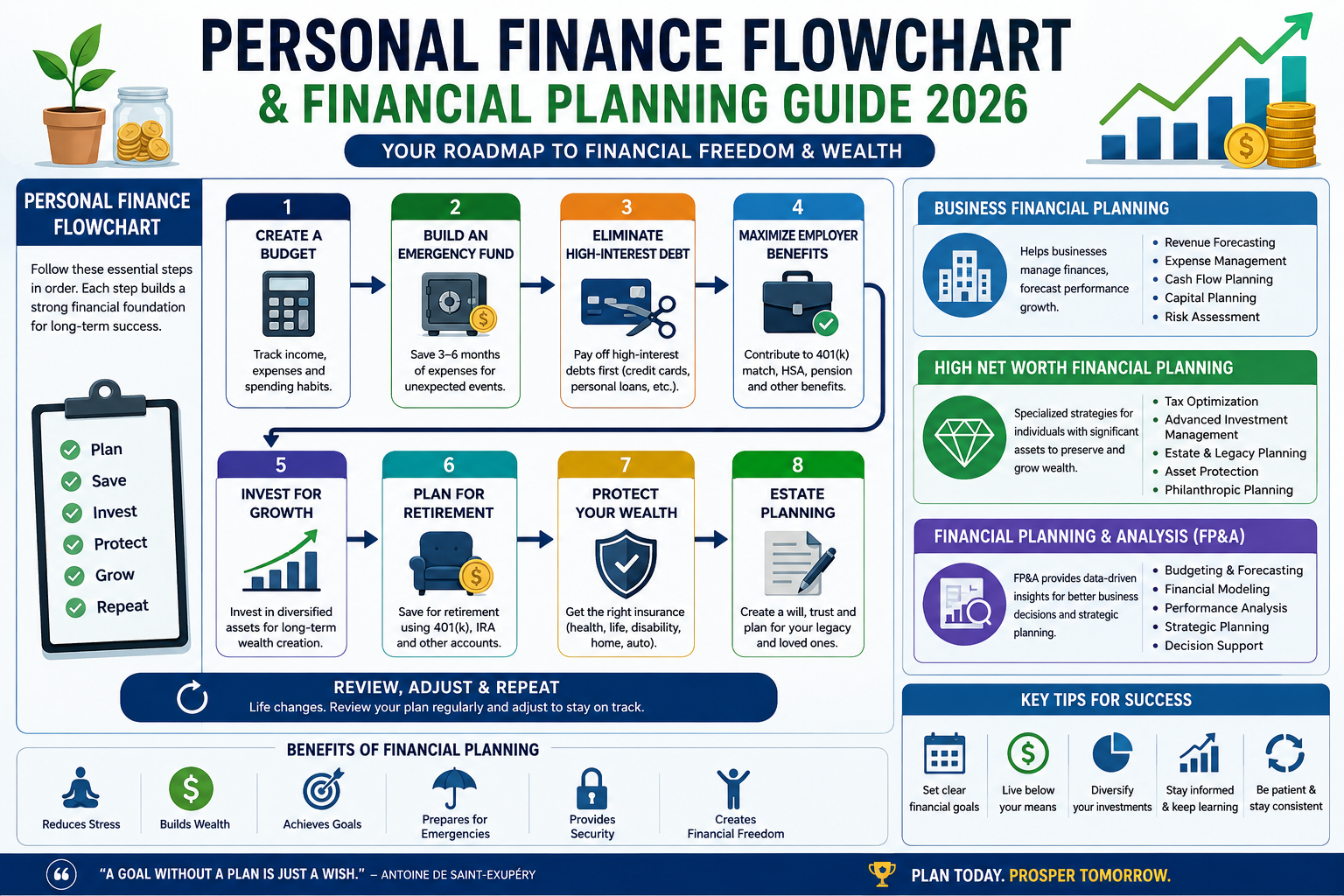
A personal finance flowchart is a visual roadmap that helps individuals make smart financial decisions in the correct order. Instead of randomly saving or investing, the flowchart ensures that each financial step is completed before moving to the next stage.
Step 1: Create a Monthly Budget
The foundation of every financial plan starts with a budget.
Track:
- Income
- Fixed expenses
- Variable expenses
- Savings
- Investments
Budgeting helps identify spending patterns and reveals opportunities to save more money.
Step 2: Build an Emergency Fund
Before investing, financial experts recommend building an emergency fund.
Ideal emergency savings:
- 3–6 months of expenses
- 6–12 months for self-employed individuals
An emergency fund protects you from:
- Job loss
- Medical emergencies
- Unexpected repairs
- Economic downturns
Step 3: Eliminate High-Interest Debt
Debt with high interest rates can significantly reduce wealth-building potential.
Focus on paying off:
- Credit card debt
- Personal loans
- Payday loans
Popular debt repayment methods include:
Debt Avalanche
Pay highest-interest debts first.
Debt Snowball
Pay smallest balances first for psychological motivation.
Step 4: Maximize Employer Benefits
If your employer offers retirement matching contributions, take full advantage.
Examples include:
- 401(k) matching
- Pension contributions
- Employee stock plans
Employer matching represents free money and should be prioritized.
Step 5: Invest for Long-Term Growth
After establishing financial stability, begin investing.
Common investment options include:
- Index funds
- ETFs
- Mutual funds
- Stocks
- Bonds
- Real estate
Diversification helps reduce risk while maximizing long-term returns.
Step 6: Plan for Retirement
Retirement planning ensures financial independence later in life.
Common retirement accounts:
- 401(k)
- Roth IRA
- Traditional IRA
- SEP IRA
The earlier you start investing, the more you benefit from compound growth.
Step 7: Protect Your Wealth
Financial planning also includes risk management.
Important coverage may include:
- Health insurance
- Life insurance
- Disability insurance
- Home insurance
- Auto insurance
Insurance protects assets and prevents financial setbacks.
Step 8: Estate Planning
Estate planning helps ensure your assets are distributed according to your wishes.
Key documents include:
- Will
- Trust
- Power of Attorney
- Healthcare Directive
Estate planning is essential for preserving wealth across generations.
Business Financial Planning
Business financial planning focuses on managing company finances to support growth, profitability, and sustainability.
Every successful company relies on a financial plan to guide decision-making.
Why Business Financial Planning Matters
Business financial planning helps organizations:
- Forecast revenue
- Control expenses
- Manage cash flow
- Secure funding
- Improve profitability
- Support expansion
Without financial planning, businesses often face cash shortages and operational inefficiencies.
Financial planning involves understanding how budgeting, investing, and risk management work together. The comprehensive overview available on Wikipedia’s Financial Planning page provides valuable background information on the principles and practices used by financial professionals worldwide.
Components of Business Financial Planning
Revenue Forecasting
Estimate future sales and income.
Expense Management
Track operating costs and identify savings opportunities.
Cash Flow Planning
Monitor incoming and outgoing cash to maintain liquidity.
Capital Planning
Allocate resources efficiently for growth projects.
Risk Assessment
Prepare for economic downturns and market volatility.
High Net Worth Financial Planning
High net worth financial planning serves individuals with substantial assets who require advanced wealth management strategies.
Generally, high-net-worth individuals possess investable assets exceeding $1 million.
Unique Financial Challenges
High-net-worth individuals face:
- Complex tax situations
- Estate planning concerns
- Asset protection needs
- Investment diversification challenges
- Philanthropic planning decisions
Professional financial planning becomes increasingly valuable as wealth grows.
Key High Net Worth Financial Planning Strategies
Tax Optimization
Reducing tax liabilities can significantly increase long-term wealth.
Strategies include:
- Tax-loss harvesting
- Charitable contributions
- Retirement account optimization
- Strategic asset placement
Advanced Investment Management
High-net-worth investors often diversify across:
- Stocks
- Bonds
- Private equity
- Real estate
- Hedge funds
- Alternative investments
Diversification helps preserve capital while generating growth.
Estate and Legacy Planning
Wealth transfer planning becomes increasingly important.
Common tools include:
- Trusts
- Family partnerships
- Gifting strategies
- Charitable foundations
These methods help reduce estate taxes and preserve wealth.
Asset Protection
Asset protection strategies help shield wealth from:
- Lawsuits
- Creditors
- Business risks
Professional legal and financial guidance is often necessary.
Financial Planning and Analysis (FP&A)
Financial Planning and Analysis (FP&A) is a specialized business function responsible for forecasting, budgeting, financial reporting, and strategic planning.
FP&A professionals help organizations make data-driven decisions.
Core Responsibilities of FP&A
Budgeting
Creating annual financial plans.
Forecasting
Predicting future business performance.
Financial Modeling
Building models to evaluate strategic decisions.
Performance Analysis
Comparing actual results against forecasts.
Strategic Planning
Supporting executive decision-making.
Why FP&A Is Important
Effective FP&A provides:
- Better decision-making
- Improved profitability
- Greater operational efficiency
- Enhanced investor confidence
- Accurate growth projections
Modern businesses increasingly rely on FP&A teams to navigate changing economic conditions.
Creating Your Own Financial Planning Strategy
A successful financial plan should be customized to your goals.
Step 1: Define Financial Goals
Examples:
- Buy a home
- Retire early
- Start a business
- Eliminate debt
- Build generational wealth
Step 2: Evaluate Current Finances
Review:
- Income
- Expenses
- Assets
- Liabilities
- Investments
Step 3: Develop an Action Plan
Create specific targets for:
- Saving
- Debt repayment
- Investing
- Retirement contributions
Step 4: Monitor Progress
Review your financial plan regularly.
Adjust for:
- Life changes
- Economic conditions
- New goals

Common Financial Planning Mistakes
Avoid these common errors:
Ignoring a Budget
Without tracking expenses, achieving financial goals becomes difficult.
Delaying Investments
Waiting to invest reduces the power of compounding.
Insufficient Emergency Savings
Unexpected expenses can derail financial progress.
Lack of Diversification
Concentrated investments increase risk.
No Estate Plan
Failing to plan for wealth transfer can create unnecessary complications.

The Future of Financial Planning in 2026
Technology is transforming financial planning through:
- Artificial intelligence
- Automated investing
- Robo-advisors
- Advanced analytics
- Real-time financial monitoring
Individuals and businesses now have access to sophisticated planning tools previously available only to financial institutions.
As financial markets continue evolving, structured financial planning remains one of the most effective ways to build and preserve wealth.
Conclusion
A well-designed personal finance flowchart provides a clear path toward financial success by helping individuals prioritize budgeting, emergency savings, debt repayment, investing, and retirement planning. Whether you’re focused on personal wealth, business financial planning, high net worth financial planning, or financial planning and analysis, creating a structured strategy can significantly improve long-term financial outcomes.
Financial planning is not a one-time activity but an ongoing process that adapts to your changing goals and circumstances. By following proven financial planning principles, you can build financial security, increase wealth, and achieve lasting financial freedom in 2026 and beyond.
FAQs
What is financial planning?
Financial planning is the process of managing money through budgeting, saving, investing, retirement planning, and risk management to achieve financial goals.
What is a personal finance flowchart?
A personal finance flowchart is a step-by-step roadmap that guides individuals through budgeting, saving, debt repayment, investing, and wealth-building decisions.
Why is business financial planning important?
Business financial planning helps companies forecast revenue, manage expenses, improve cash flow, and support long-term growth.
What is high net worth financial planning?
High net worth financial planning focuses on advanced wealth management strategies for individuals with significant assets and complex financial needs.
What does financial planning and analysis (FP&A) do?
FP&A professionals create budgets, forecasts, financial models, and strategic insights that help businesses make informed financial decisions.
A strong financial plan works best when combined with smart credit management and banking strategies. If you’re looking to improve your overall financial health, be sure to read our guides on Does Closing a Credit Card Hurt Your Credit Score in the USA (2026 Guide) and How to Switch Banks Without Losing Money or Payments. These resources can help you protect your credit score, avoid costly mistakes, and make better financial decisions as part of your long-term wealth-building strategy.